

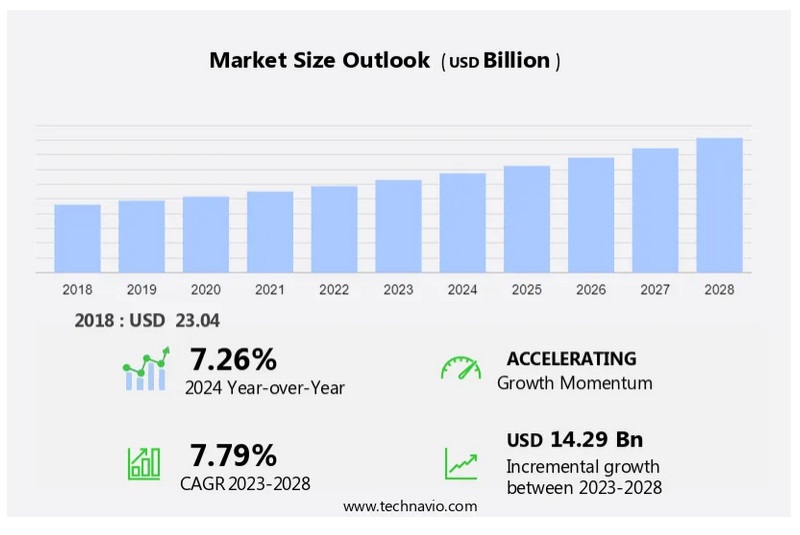
Technavio desarrolló un estudio en el que proyecta que el tamaño del mercado de nutrición deportiva aumentará en US$14.290 millones, a una tasa compuesta anual del 7,79% entre 2023 y 2028, en donde América del Norte domina el mercado, con la mayor participación en 2023. Este predominio se atribuye a la creciente demanda de productos de nutrición deportiva, la preferencia por una alimentación saludable y opciones listas para beber (RTD), un número creciente de gimnasios y un aumento en la popularidad de los polvos sustitutivos de comidas.
A continuación, la información publicada en inglés:
Market Segmentation by Distribution Channel
Offline channels such as supermarkets and hypermarkets have emerged as the most popular distribution channels for products such as sports nutrition. The growth of supermarkets and hypermarkets is attributable to the growth of the organized retail sector in developed and developing economies. The growing retail industry and the establishment of numerous retail outlets are driving sales in this segment. Thus, the overall sales of health and nutrition products, by convenience stores are increasing at a high rate. Independent retailers are private owners who have built their retail stores by assessing the needs of the business, which include staffing, marketing, merchandising, and sales. With the increasing number of independent retailers across the world, sales through offline channels are expected to increase during the forecast period.
Market Segmentation by Product
The market share growth by the non-protein sports nutrition segment will be significant during the forecast period. The non-protein segment is growing gradually due to the availability of convenient products, rising demand from mainstream consumers, and the demand for clean-label products. It includes amino acids, carbohydrates, Beta-alanine, creatine, L-carnitine, and nitric oxide boosters. These are available in various forms, such as powder, bars, ready-to-drink (RTD), gels, and tablets.
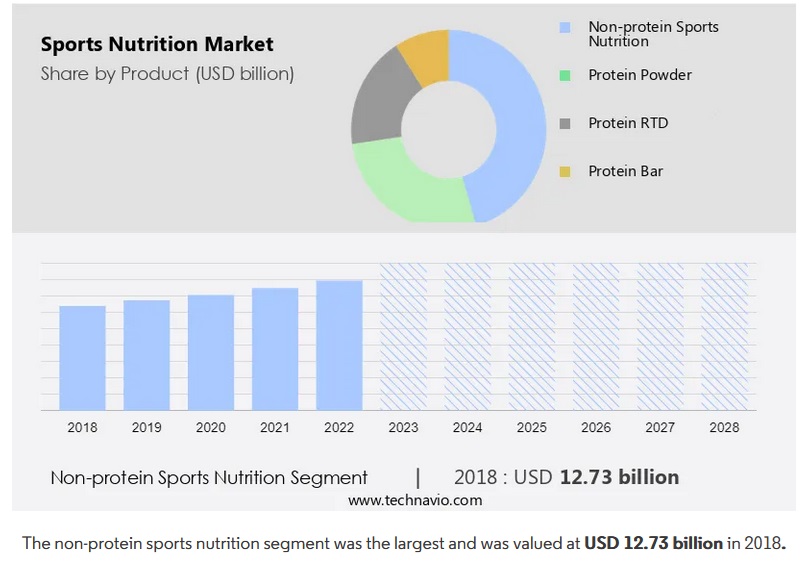
Companies in the market in focus, such as Nestle SA and FitLife Brands Inc. are constantly innovating with new formats and flavors, making non-protein products more appealing and convenient to consume. This includes drink mixes, snack bars, gummies, and chewable tablets. Moreover, the rise of online marketplaces and specialty stores provides greater visibility and accessibility for non-protein products, expanding their reach to a wider audience. Furthermore, the growing trend of personalized nutrition and functional ingredients enhances its appeal. These offerings often target hydration, energy, and micronutrient replenishment, expanding the market beyond traditional protein-centric products. Overall, the multifaceted approach of major vendors and the evolving preferences of consumers contribute to the robust growth of this segment in the market during the forecast period.
Market Dynamics – Market Growth Analysis Driver
Rise of personalized nutrition and data-driven approaches is notably driving the market growth. By analyzing personal data like genetics, body composition, and training metrics, individuals can identify their unique nutritional requirements. Personalized approaches foster a sense of control and ownership over their nutrition, leading to higher engagement and satisfaction with these products. Personalized recommendations based on individual data can help users avoid ineffective products and focus on solutions with a higher chance of success. This reduces trial-and-error purchases and boosts user confidence in the effectiveness of sports nutrition. It allows brands to cater to specific demographics or athletic disciplines with unique needs. This opens doors to niche markets like vegan athletes, endurance runners, or individuals with specific dietary restrictions.
For instance, NOW Foods offers a wide range of individual ingredients and customizable protein blends globally, enabling users to create personalized protein powders based on their specific needs and preferences. Additionally, their online platform provides information and tools to help users make informed choices. As technology advances and data collection becomes more sophisticated, more personalized and data-driven solutions will emerge, which will drive the growth of the market during the forecast period.
Market Growth and Trends
Growing demand for plant-based sports nutrition is an emerging trend shaping market development. This growing trend is influenced by shifting consumer preferences towards plant-centric diets, sustainability concerns, and the desire for cleaner, more ethically sourced products. The rise in plant-based diets, whether vegetarian, vegan, or flexitarian, has led to an increased demand for plant-derived protein sources. Consumers are conscious of the environmental impact of their food choices. It aligns with these values as plant farming generally has a lower carbon footprint compared to animal agriculture. Major instances of this trend include the launch of plant-based protein powders, bars, and shakes by notable brands.
Moreover, this trend extends beyond protein, with companies incorporating plant-derived ingredients like beetroot for endurance, turmeric for anti-inflammatory benefits, and spirulina for added nutrients. As more consumers embrace plant-based lifestyles for health, environmental, and ethical reasons, the market is adapting to meet this demand, with plant-based options becoming increasingly prevalent and contributing significantly to the growth of the market during the forecast period.
Market Challenge
Consumers inability to differentiate between sports nutrition products and high-protein products is a significant challenge hindering the market growth. The increasing availability of high-protein products in the market has posed a threat to the market. At times, consumers are unable to differentiate between these products and high-protein products. They consider high-protein products to be substitute products as the consumption of the former gives similar benefits. Hence, the lack of awareness and proper knowledge leads many consumers to purchase high-protein products.
Moreover, the consumption of these products provides necessary nutrients to the body and has various health benefits. However, the availability of various products, such as dietary supplements, low-fat yogurts, and meal replacement products, acts as substitutes. This greatly hampers the sales of these products as they are comparatively cheaper and perform a similar function, which may hinder the growth of the market during the forecast period.
Technavio’s analysts have provided extensive insight into the market forecasting, detailing the regional trends and drivers influencing the market’s trajectory throughout the forecast period. In addition, the growing number of fitness centers indicates the increasing attention on fitness. North America has more fitness centers than any other country in the world. In the US, more than 62 million health club members use a club or studio for more than 100 days a year. There are more than 6,000 health clubs in Canada. Such a scenario is favorable for the market in North America, as trainers in such centers suggest various products to consumers based on their personal requirements. This has encouraged the sales of various products, which, in turn, has propelled the growth of the regional market to a significant extent.
Furthermore, the growing focus on meal-replacement powders among women consumers is another factor that will favor the market growth in the region. The increasing working population seeks convenient nutritional food products, which is expected to fuel market growth. The increasing number of new product launches in the sports supplements market category and the presence of key market players in the region, such as Abbott Laboratories (Abbott), Nestle SA (Nestle), and Weider Global Nutrition LLC (Weider Global), are driving the growth of the regional market during the forecast period.
RealRisk / Fuente: Technavio